
“1 network. 1 timetable. 1 ticket.”
The Free State of Bavaria, the City of Munich and several districts within the MVV are working together under this principle.
The aim is to ensure that all timetables are well coordinated and to offer a simple, common fare system.
An MVV ticket allows passengers to use all modes of transport within the MVV area. Connections and frequencies are planned to make travel as convenient as possible.
A transport association provides a solid foundation for cooperation between transport operators and the public sector.
The association coordinates this cooperation.
A clear division of responsibilities benefits all parties involved and results in an attractive public transport system.
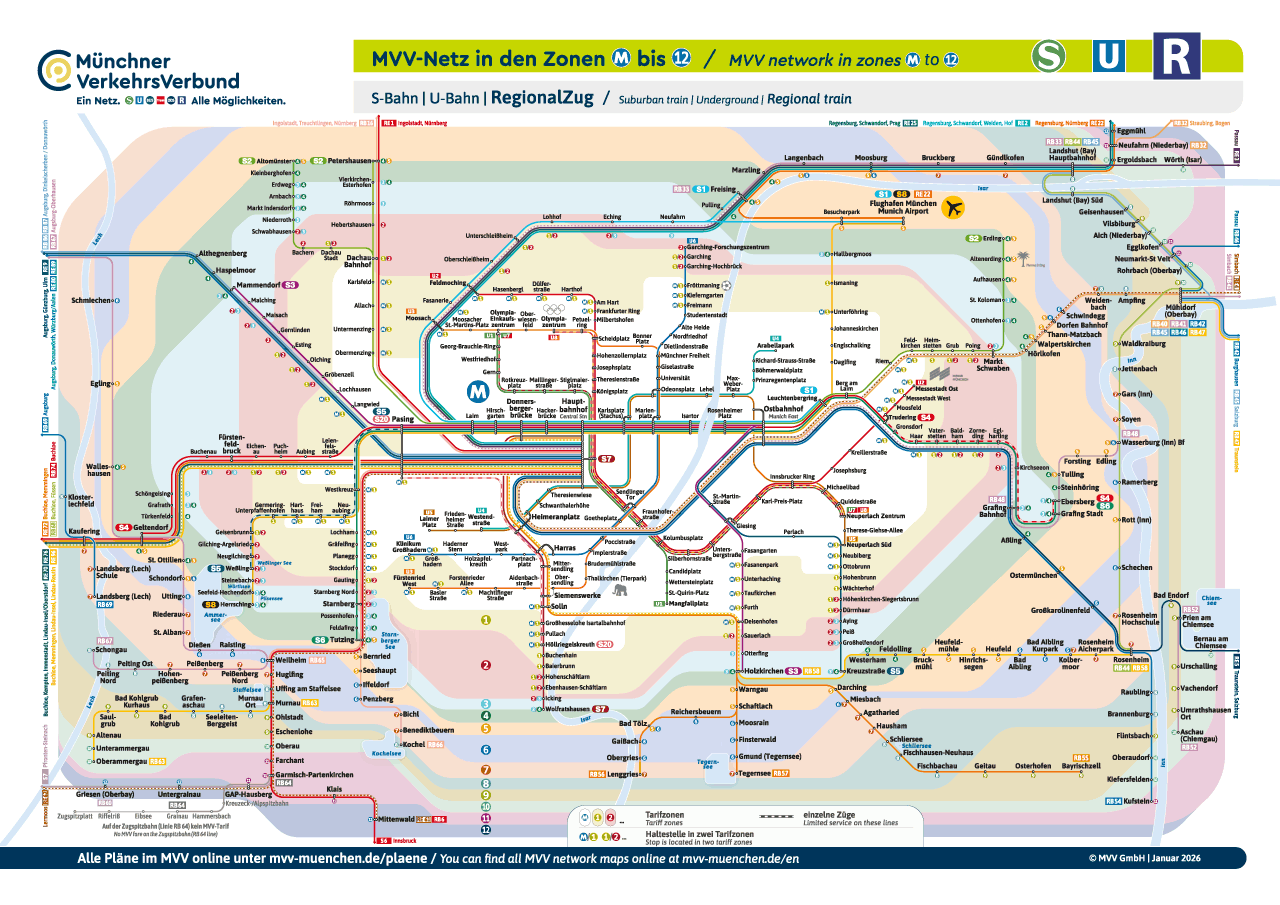
Key responsibilities of the MVV
MVV GmbH coordinates all partners within the network. In addition to the shareholders, this includes over 50 transport companies that provide services within the MVV network.
The most important tasks of MVV GmbH include:
- Planning transport services
- Organisation of regional bus services
- Fare structure
- Marketing and information
- Transport and market research
MVV develops the joint MVV fare structure, distributes revenue to transport operators, plans existing and future services, and provides information about its services.
The MVV network area and its passengers (from 2026)
The MVV comprises:
- several cities, including Munich, Rosenheim and Landshut
- numerous districts in Upper Bavaria and neighbouring regions
- other municipalities, including those beyond the state border, such as Kufstein
The network area covers over 13,600 square kilometres.
In total, around 410 municipalities with approximately 4.15 million inhabitants belong to the MVV.
In 2019, shortly before the coronavirus pandemic, 737 million passengers used the MVV’s services.